
Health PR
Shaping your brand in an AI-driven world
AI shapes perception – ensure it shapes yours In 2026, generative artificial intelligence (GenAI) AI is increasingly shaping your brand before anyone sees it. Large language models (LLMs) such as ChatGPT and Gemini are becoming the first stop for patients, clinicians, policymakers, and journalists. In healthcare, this means your story is summarised, interpreted, and presented…
Read MoreFrom campaigns to change: why strategic communications is health system infrastructure
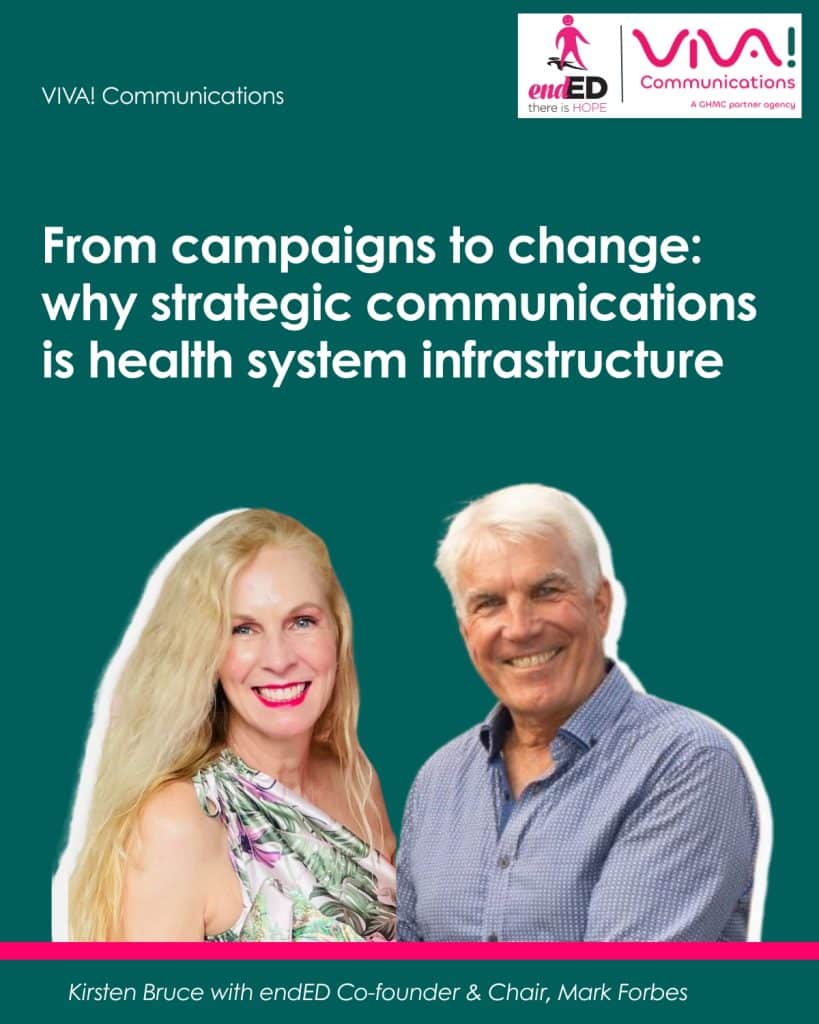
By Kirsten Bruce, Founder & Owner, VIVA! Communications Awareness does not equate to access. Visibility does not equal system reform. And without strategy, storytelling alone fails to improve health outcomes. In eating disorders – one of Australia’s most complex and high-risk mental health conditions – we’ve reached a pivotal moment. Public understanding is improving. Research…
Read MoreAPAC’s expanding tropical disease risk: Are pharma leaders passing the test?
Across the Asia-Pacific (APAC) region, tropical diseases – neglected tropical diseases (NTDs) and mosquito-borne viruses such as dengue fever, Japanese encephalitis (JE), chikungunya, and Zika virus – are spreading faster than ever, driven by climate change, urbanisation, and unprecedented population mobility. Yet even as outbreaks intensify, attention, preparedness, and sustained communication investment often peak during…
Read MoreFrom control to connection: how healthcare communications has evolved
Merely two decades ago, health communications prioritised control. Today, it’s about connection. Organisations that recognise this shift are well-positioned to earn trust and engage professionals, patients, and communities. In the mid-2000s, the media release was king. Healthcare communications primarily revolved around product announcements, regulatory approvals (PBS listings and TGA announcements), funding updates, and clinical milestones.…
Read MoreFrom measurement to meaning: redefining modern public relations
Public relations has long been assessed through its outputs: what was published, where it appeared, and how far it travelled. These measures still matter. But in a communications environment shaped by platforms, algorithms and AI-driven discovery, they are no longer sufficient on their own. The question facing PR today is not whether it can generate…
Read More